In-House AI Assistant
In internal useZekAI - Closed-Circuit
An AI assistant that runs on company hardware and is wired into the ERP: it answers cash, customer, stock, and maturity questions from live data, and the data never leaves the building.
Screenshots
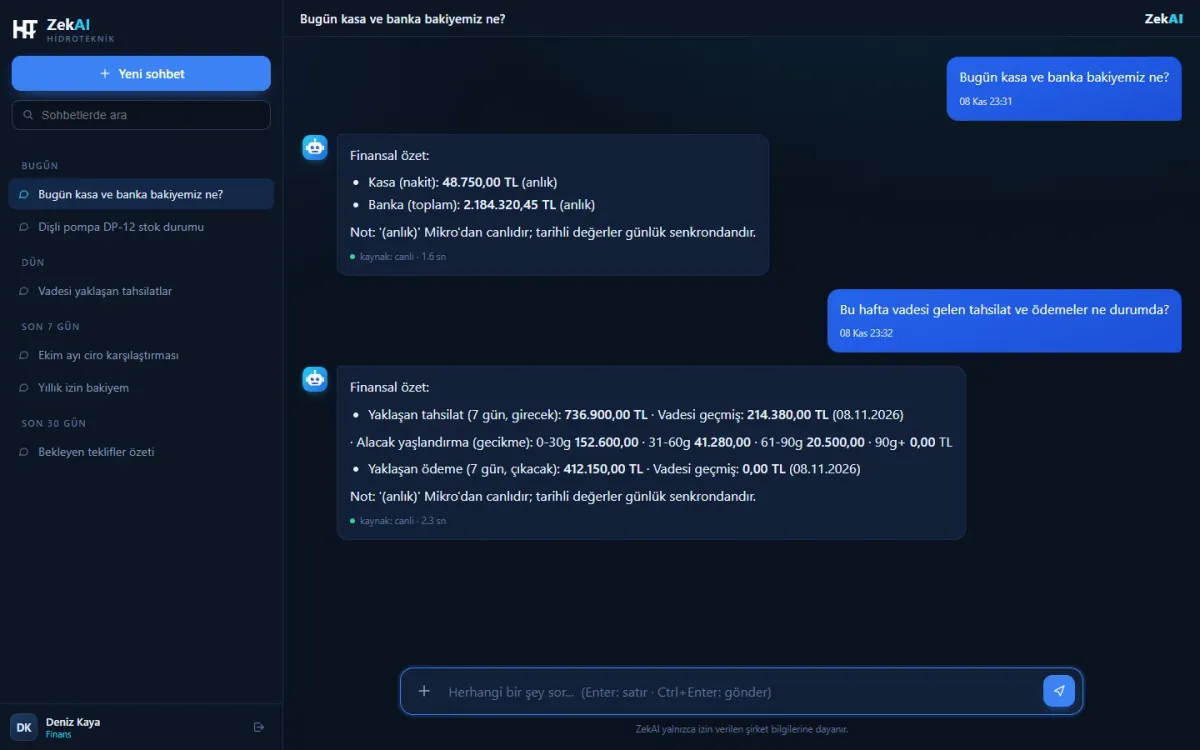
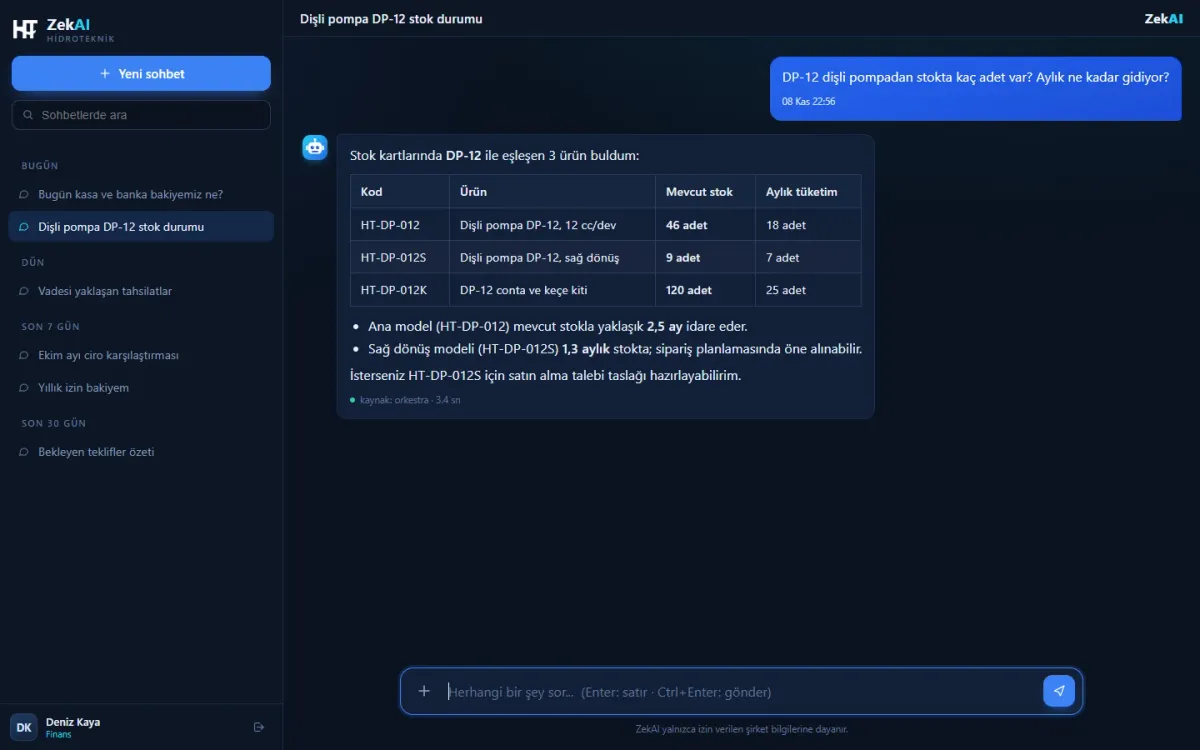
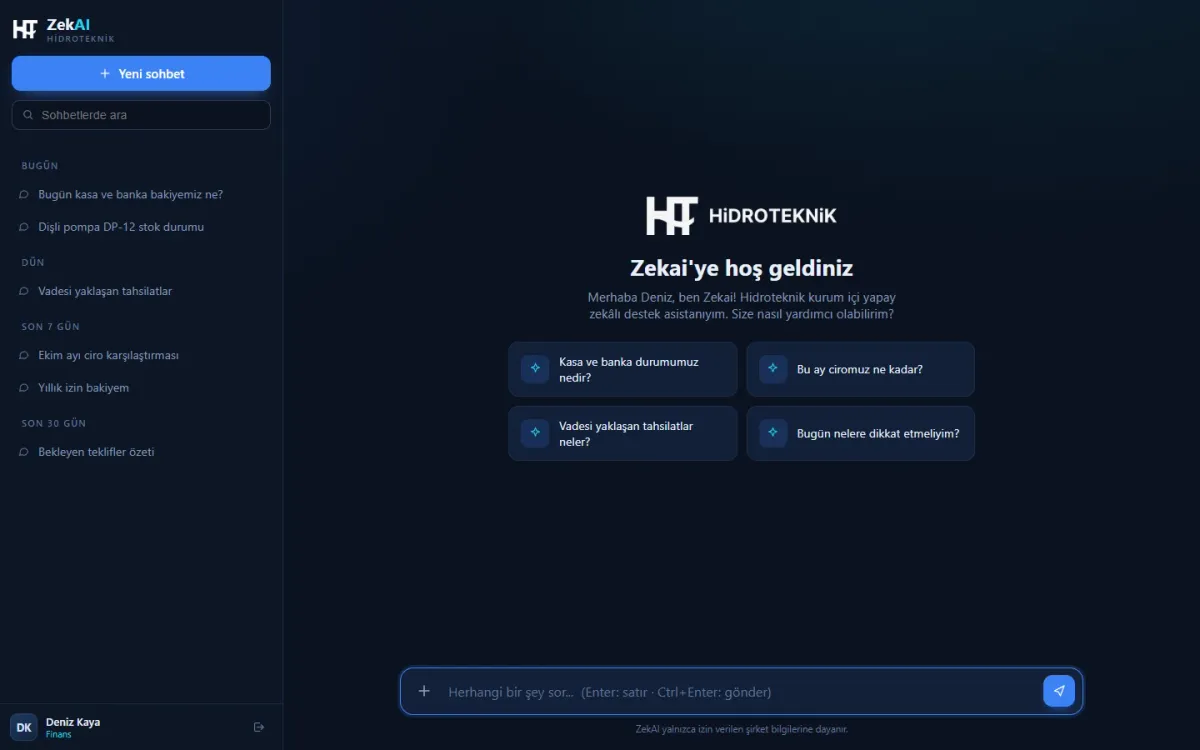
Cloud AI ships corporate data to external servers. ZekAI chooses the opposite: the language model runs locally on the company’s own server, and questions, documents, and answers never leave.
What sets it apart from an ordinary chatbot is the ERP connection. An employee asks "what is in the cash register today", "what is this customer’s balance and payment plan", "what is our revenue this period", "which suppliers do we owe", "what is the stock of this item", and the assistant pulls live data from Mikro ERP to answer. Leave and asset records, quotations sent, and creating new requests are part of the same tool set.
Not everyone sees everything: a user’s permissions come from the department in their signed session token; accounting data opens to accounting, personnel data to the authorized person. Every question and every tool call is written to an audit log, with protection against prompt-injection attempts.
On the document side, a hybrid search runs over a knowledge base of company rules (with Turkish-aware chunking and re-ranking); files and images can be uploaded, and text in images is read. For hard questions the model switches to a deeper reasoning mode. Exchange rates, chat history, and summary reports to Telegram are part of the system too.
Highlights
- Language model runs locally on company hardware
- Live Mikro ERP data: cash, bank, customers, revenue, stock, maturities
- Department-based permissions; audit log
- Hybrid search over the company knowledge base
- File and image upload, text recognition in images
- Deep reasoning mode for hard questions
- Telegram reports, exchange rates, chat history